Willem ten Asbroek, CEO von BizBloqs · 7. September 2026
Die meisten Auswahlverfahren sind entschieden, bevor der erste Anbieter angerufen wird: durch die Art, wie die Anforderungen geschrieben sind. Ein Lastenheft mit 300 Zeilen Funktionsmatrix bekommt von jedem Anbieter 300 Häkchen und sagt Ihnen nichts. Ein Lastenheft, das die Abläufe beschreibt, die wirklich laufen müssen, liefert Antworten, die Sie vergleichen können, und Demos, die ein Anbieter auch nicht bestehen kann.
Lastenheft, Pflichtenheft, Angebotsanfrage: wer schreibt was?
Bevor es um den Inhalt geht, kurz die Begriffe. Im Lastenheft beschreiben Sie als Auftraggeber, was die Software für Ihr Lager leisten muss. Das Pflichtenheft schreibt der Anbieter: wie er das umsetzen will. Der Unterschied zwischen Lastenheft und Pflichtenheft ist also der Absender. Wenn Sie das Lastenheft an mehrere Anbieter schicken und um ein vergleichbares Angebot bitten, heißt das Ausschreibung oder Angebotsanfrage, kurz RFP.
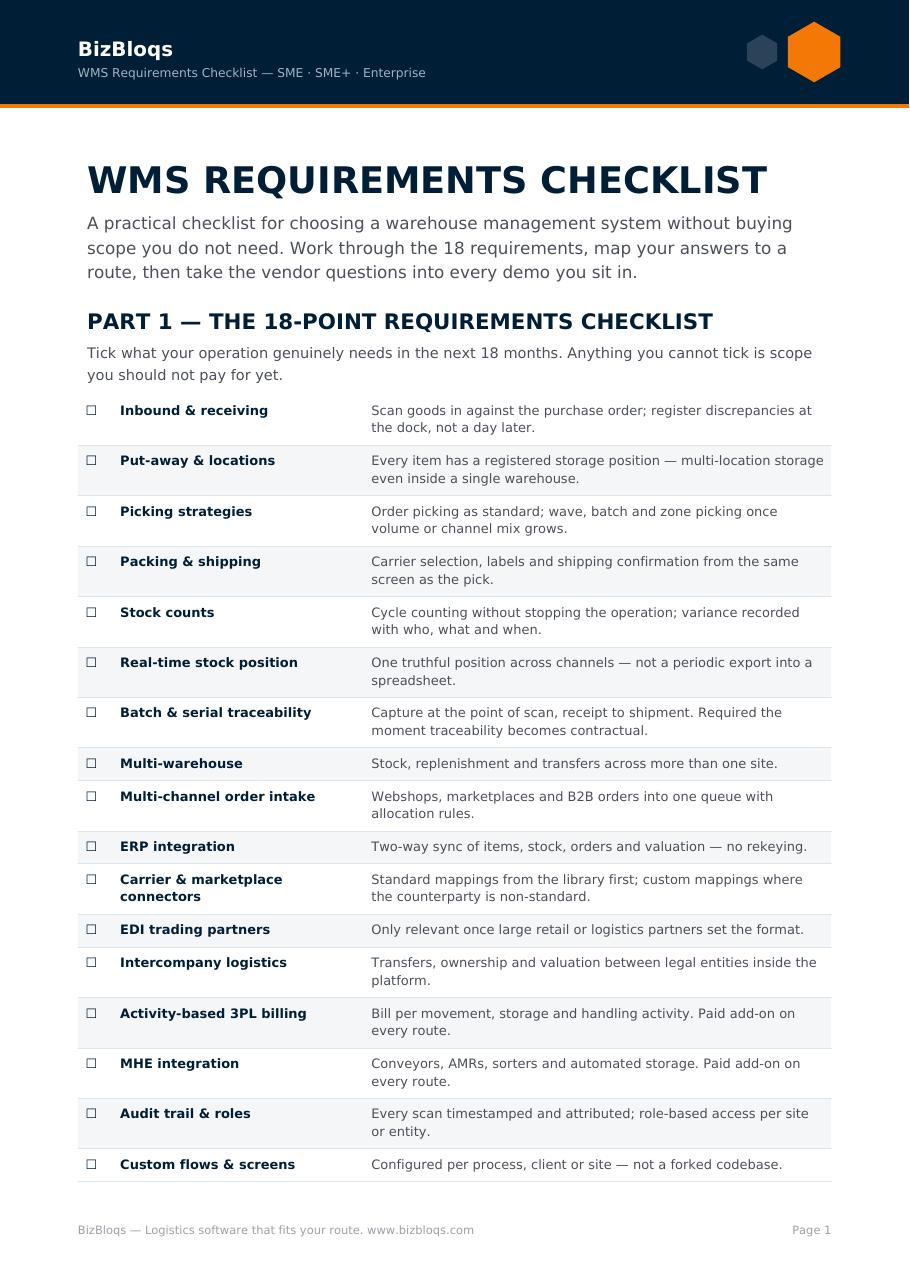
Dieser Beitrag zeigt, was in ein Lastenheft für ein Lagerverwaltungssystem gehört. Klären Sie vorher, welche der fünf Arten von Lagerlogistik Software zu Ihrem Betrieb passt.
Seitlich wischen, um die ganze Abbildung zu sehen.
Lastenheft Beispiel für Handel und Produktion: die acht Kapitel
Die folgende Gliederung können Sie als Lastenheft Vorlage übernehmen. Sie passt für Großhandel, E-Commerce und Produktion gleichermaßen; die Inhalte jedes Kapitels kommen aus Ihrem Betrieb. Wer eine Branchenlösung für Ihr Lager sucht, ergänzt in Kapitel 2 und 3 die Besonderheiten der eigenen Branche.
1. Umfang und Rahmen
Standorte, Schichten, Auftragszeilen pro Tag (Durchschnitt und Spitze), Anzahl Artikel, Lagerarten, Saisonverlauf und das erwartete Wachstum in den nächsten drei Jahren. Anbieter rechnen Preis und Umfang auf dieser Grundlage. Sind die Angaben ungenau, bekommen Sie Angebote, die sich nicht vergleichen lassen.
2. Die Abläufe, die laufen müssen
Beschreiben Sie die Abläufe so, wie sie heute tatsächlich passieren: Wareneingang und Qualitätsprüfung, Einlagerung, Nachschub, Kommissionierung, Verpacken, Versand, Inventur, Retouren und Zusatzleistungen wie das Zusammenstellen von Sets (das nennt man Kitting) oder Etikettieren.
Bei der Kommissionierung nennen Sie die Methoden, die Sie brauchen: einzeln pro Auftrag, mehrere Aufträge in einem Rundgang (Batch-Kommissionierung), nach Lagerzonen getrennt (Zonenkommissionierung) oder in zeitlich gebündelten Wellen (Wellenkommissionierung). BizBloqs unterstützt Wellen-, Zonen- und Cluster-Kommissionierung.
3. Pflichten und Kontrollen
Chargen, Seriennummern, Haltbarkeit, die Regel „was zuerst abläuft, geht zuerst raus“ (das nennt man FEFO), Qualitätssperre, Gefahrgut, kundenspezifische Verpackungsvorschriften und Prüfpflichten. Wie BizBloqs Seriennummern führt, zeigt die Seite Seriennummernverwaltung; in regulierten Branchen geht es zusätzlich um lückenlose Rückverfolgbarkeit.
Trennen Sie, was gesetzlich vorgeschrieben ist, von dem, was Sie sich wünschen. Anbieter bepreisen beides unterschiedlich.
4. Schnittstellen
Nennen Sie Ihr ERP mit genauer Version, Ihre Verkaufskanäle, Marktplätze, Versanddienstleister, Ihr System für Produktdaten (PIM) und Ihre Absatzplanung. Schreiben Sie nicht nur „ERP anbinden“, sondern welche Nachrichten pro System hin- und hergehen müssen: Artikelstamm, Aufträge, Bestandsmeldungen, Lieferavis. Ein Beispiel für eine solche Nachricht ist das elektronische Lieferavis DESADV; was eine EDI Schnittstelle dabei leistet, erklären wir separat. Wie BizBloqs die Anbindung an Ihr ERP löst, sehen Sie auf der Integrationsseite.
5. Hardware und Standort
MDE-Geräte und Scanner, mobile Endgeräte, Etikettendrucker, WLAN-Abdeckung, Fördertechnik und jede Automatisierung, die zum Umfang gehört, jeweils mit Lieferant. Fehlt die Hardware im Lastenheft, kommen später zuverlässig Nachträge. Die Steuerung von Fördertechnik gehört bei BizBloqs zur Stufe Enterprise: BizBloqs schickt die Aufgaben, die Steuerung der Anlage bewegt die Maschine.
6. Das Änderungsmodell: das Kapitel, das fast immer fehlt
Fragen Sie für jede gewünschte Abweichung vom Standard: Ist das Konfiguration oder Entwicklung? Wer setzt es um? Wie lange dauert es? Was kostet es im zweiten Jahr?
An diesem Kapitel trennen sich Systeme, die bezahlbar bleiben, von Systemen, bei denen jede Prozessänderung ein neues Projektangebot wird.
7. Kaufmännisches
Abrechnungsgrundlage (Nutzer, Standorte, Volumen), Einführungskosten, Schulung, Support mit Reaktionszeiten, intensive Begleitung nach dem Start, Vertragslaufzeit, Ausstiegsregeln und der Export Ihrer Daten. Fragen Sie nach der Summe über drei Jahre, nicht nach Monatsbeträgen; das ist die Total Cost of Ownership. Womit Sie bei den Kosten rechnen sollten, steht auf der Seite Lagerverwaltungssystem Kosten.
8. Nachweise
- Eine Demo mit Ihren eigenen Artikeldaten und Aufträgen, nicht mit den Demodaten des Anbieters
- Ein Referenzkunde aus Ihrer Branche in vergleichbarer Größe, den Sie direkt anrufen können (fragen Sie nach Fallstudien)
- Eine namentlich genannte Projektleitung mit Phasenplan und Verantwortlichen je Phase
Sechs Fragen, an denen sich Anbieter unterscheiden
- Ist diese Abweichung Konfiguration oder Entwicklung?
- Haben Sie einen Kunden, der live mit genau meiner ERP-Version arbeitet?
- Was kostet eine Prozessänderung im zweiten Jahr?
- Wer bereinigt die Artikeldaten, und bis wann müssen sie fertig sein?
- Was passiert, wenn eine Nachricht über eine Schnittstelle nicht ankommt?
- Was ist der kleinste Umfang für den Start, und was wartet auf Phase zwei?
Was nicht ins Lastenheft gehört
Streichen Sie lange Funktionsmatrizen, Fragen, die jeder Anbieter mit Ja beantwortet, und alles, was Sie in einer Demo nicht prüfen können. Solche Punkte verlängern die Auswahl, ohne einen einzigen Kandidaten auszusortieren. Eine gute Lastenheft Software oder Vorlage hilft beim Gliedern; entscheidend bleibt, dass jeder Satz einen Anbieter ausschließen kann.
Wie Sie danach strukturiert vorgehen, lesen Sie unter Lagerverwaltungssystem auswählen. Wie Sie die Antworten bewerten, zeigt der Lagerverwaltungssoftware Vergleich.
Häufige Fragen zum Lastenheft
Was ist ein Lastenheft?
Im Lastenheft beschreibt der Auftraggeber, was die Software leisten muss: welche Abläufe, Mengen, Schnittstellen und Pflichten es gibt. Es sagt was und wofür, nicht wie.
Was ist ein RFP?
RFP ist die übliche Abkürzung für eine Angebotsanfrage, oft auch Ausschreibung genannt. Sie schicken das Lastenheft an mehrere Anbieter und bitten um ein vergleichbares Angebot mit Preis, Plan und Nachweisen.
Wie sieht ein Lastenheft für ein Lagerverwaltungssystem aus?
Es folgt den acht Kapiteln oben: Umfang, Abläufe, Pflichten, Schnittstellen, Hardware, Änderungsmodell, Kaufmännisches und Nachweise. Kapitel 2 und 6 entscheiden am meisten.
Zwei Fragen zu Ihrem eigenen Lastenheft
- Wie viele Zeilen Ihres Entwurfs würde jeder Anbieter einfach mit Ja beantworten?
- Steht in Ihrem Lastenheft schon, was eine Prozessänderung im zweiten Jahr kosten darf?
Schreiben Sie Ihre Anforderungen nicht zuerst, sondern testen Sie sie. Dreißig Minuten an Ihrem echten Ablauf verbessern ein Lastenheft meist mehr als weitere Wochen am Schreibtisch.
Sie möchten Ihr Lastenheft an Ihrem eigenen Lagerablauf prüfen, bevor Sie es verschicken? Demo buchen